METSMETSMETSMETS
  • Home
  • About
    • METS Programme
    • METS Team
  • Our Core Work
    • Health Systems Strengthening
      • District Led Programming
      • Strategic Information
    • Data Science & Informatics
    • Disease Surveillance
  • Resources
    • Articles
    • Publications
    • Newsletters
    • Reports
    • Bulletins
    • District Profiles
    • District Strategic Plans
    • Videos
    • Mobile Application
    • BUHIC
  • Dashboards
    • UgandaEMR Portal
    • HIV Prevention Portal
    • DREAMS Tracker
    • RASS Dashboard
    • Viral Load Dashboard
    • VMMC Dashboard
    • Option B+ Dashboard
    • UgandaEMR Metrics Dashboard
  • Updates
    • News
    • Events
    • Careers
  • Contact

METS applauded for supporting the Mid-Term Review of HMIS Tools         

    Home Article METS applauded for supporting the Mid-Term Review of HMIS Tools         
    NextPrevious

    METS applauded for supporting the Mid-Term Review of HMIS Tools         

    By Nancy Karunganwa | Article, Article of the week, Health Systems Strengthening (HSS), News, Strategic Information (SI) | Comments are Closed | 29 July, 2022 | 0

    By: Nancy Karunganwa and Herbert Mulira

    In 2019 the Ministry of Health comprehensively revised the Health Management Information System (HMIS)  in a bid to harmonize data needs of various stakeholders.

    At the beginning of 2020, the Ministry of Health (MoH), with support from PEPFAR, revised and rolled out the HIV HMIS forms (version 2019) through national, regional and district staff training including on-site mentorships on the revised HMIS tools. HMIS is a system which records, stores, processes and generates timely and accurate data that is used to improve decision-making at various levels within the health sector.

    HMIS data is used to monitor health sector policies, guidelines and implementation. The HMIS helps to ensure routine documentation and identification of warning signals from evaluation of indicators. Production of high quality statistics is dependent on assessment of data quality and actions taken to improve it. HMIS data and indicators are reviewed every five years with mid-term review taking place every two and half years.

    MoH with support from METS organized a 14-day retreat from 4 – 15 July 2022 at the Source of the Nile Hotel in Jinja. Several key stakeholders participated with over 130 representatives from the Ministry of Health/AIDS Control Program, Centers for Disease Control (CDC), USAID, METS, SITES, Uganda Cancer Institute, National Tuberculosis and Leprosy Program (NTLP), National Drug Authority, Regional Referral Hospitals, ARC, PATH, PEPFAR Implementing Partners such as Baylor Uganda, Rakai Health Sciences Program, TASO, Mildmay among others.

    METS provided technical support in the thematic area working groups of HIV Testing Services (HTS), PMTCT/EID, Care and Treatment, Safe Male Circumcision (VMMC), Supply Chain management and Laboratory, KP/PP/PreP and Tuberculosis (TB).

    The activity started with understanding the existing primary and secondary HMIS Tools and indicators, seven (7) Technical Working Groups were created to review and propose changes in existing tools and as well introduce new HMIS Tools in order to address the existing data demands in the various program areas.  Each group was also assigned a designer who effected the proposed changes in the tools for the groups to visualize the impact of the suggested changes.

    The group activities were presented to a plenary consisting of all the participants for feedback and input, as well as discussion on the way forward on the tools. To note, a number of tools required additional consultation on the proposed changes.

    The Program Manager, AIDS Control Program, who was represented by the HIV  Prevention Coordinator, Dr. Peter Mudiope, highlighted the need to learn from the challenges experienced in the previous HMIS reviews and formulate strategies to mitigate these challenges to avoid a recurrence. He further emphasized the increasing demand for quality data to support making of informed decisions in HIV programming.

    He re-echoed the commitment of the Ministry of Health to support the review from the beginning to the end even with the existing competing activities.

    The PEPFAR Coordination Office was represented by Rachel Kwezi. In her remarks she thanked METS for supporting the retreat and applauded CDC, USAID and other partners for the work they were tirelessly putting-in towards ending AIDS by 2030. She encouraged healthy discussions and cautioned on the need to have all data requirements taken care of.

    The retreat resulted in reviews of all existing primary and secondary HMIS tools and agreed on amendments in the 7 Program Areas. These amendments addressed identified gaps in data capture and reporting. Participants agreed on a roadmap for completion of the review of the mid term HMIS review including the piloting of the proposed tools as well as the final roll out of the revised tools.

    Additionally, the retreat also identified challenges that may affect successful completion of the HMIS Mid-Term review and possible solutions to address these challenges.

    As next steps, MOH-ACP team will follow-up with the seven-program area working groups to address some of the issues that were left pending to ensure that the revised tools are ready for pilot testing. Health Care workers will continue using the old tools pending training and approval of the revised tools. Based on the agreed upon road map, the revised HMIS tools are likely to be implemented starting from July 2023.
    No tags.

    Related Post

    • Support to the generation of National and PEPFAR reports

      By Nancy Karunganwa | Comments are Closed

      By Fatumah Nalubega & Nancy Karunganwa As of October 2021, the MakSPH-METS Program was ear marked as CDC’s flagship partner for data management and named lead Strategic Information (SI) for PEPFAR. METS has since providedRead more

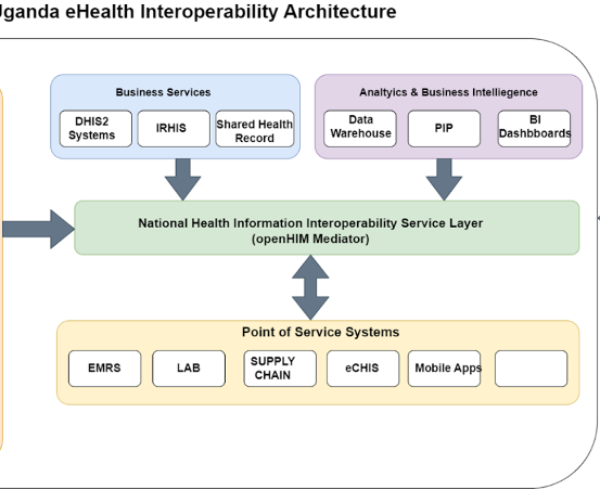
    • The Uganda eHealth Interoperability Architecture

      Transforming Health Care Through Linked Digital Systems 

      By Nancy Karunganwa | Comments are Closed

      The Ministry of Health (MOH) has embarked on a drive to transform health service delivery through use of digital systems. Working with partners, the MoH is spearheading the design, development, and implementation of interlinked healthRead more

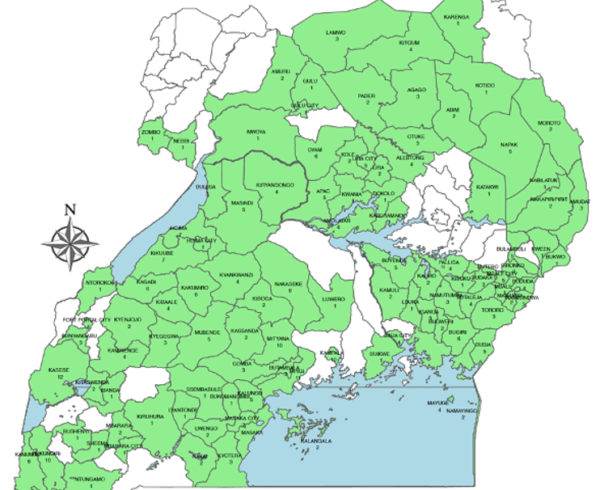
    • Status of CBS Implementation in Uganda

      Tracking Trends in HIV Outcomes: The Implementation of HIV Case-Based Surveillance

      By Nancy Karunganwa | Comments are Closed

      The Monitoring and Evaluation Technical Support (METS) Program, in partnership with the Ministry of Health (MoH) and various implementing partners, is spearheading the HIV Case-Based Surveillance (CBS) initiative across Uganda. This effort utilizes electronic medicalRead more

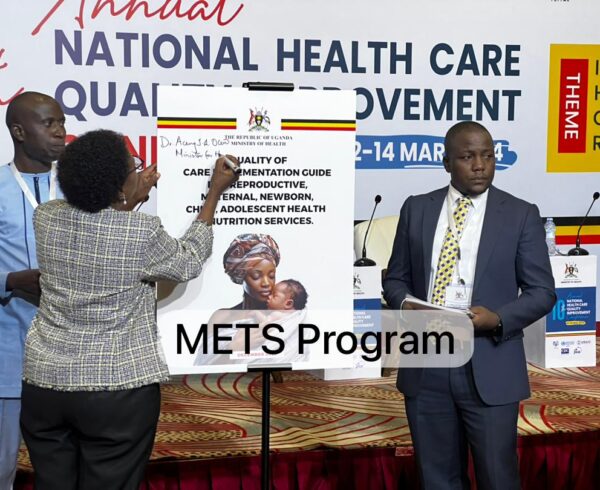
    • Hon. Dr. Aceng lauching the Quality-of-Care Implementation Guide for Reproductive, Maternal, New-born, Child and Adolescent Health and Nutrition Services

      Innovation To Strengthen Quality Improvement: Insights from The 10th National QI Conference

      By Nancy Karunganwa | Comments are Closed

      The 10th National Health Care Quality Improvement (QI) conference brought together health service providers from various parts of the country to share experiences and what they are doing to improve service delivery to patients. TheseRead more

    • Boosting Data Quality for HIV Recent Infection Surveillance Services

      By Nancy Karunganwa | Comments are Closed

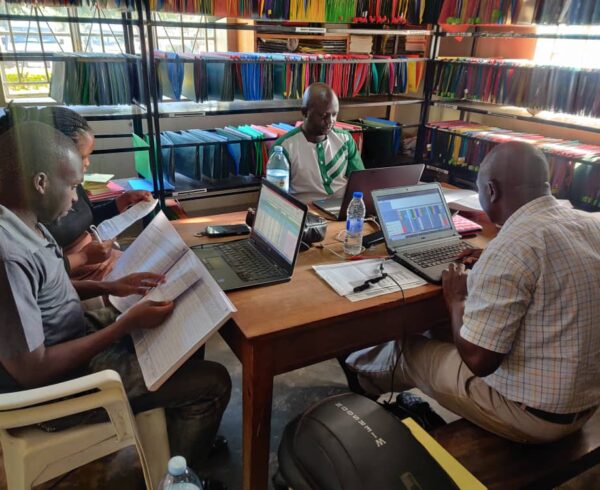
      In the period from 13th to 24th November 2023, the Ministry of Health (MoH) conducted a Recency Data Quality Assessment and Improvement (DQAI) exercise. This initiative is part of ongoing efforts to ensure accurate andRead more

    NextPrevious

    Programme Areas

    • Health Systems Strengthening
      • District Led Programming
      • Strategic Information
    • Data Science & Informatics
    • Disease Surveillance

    Archives

    • October 2024 (1)
    • July 2024 (1)
    • June 2024 (1)
    • April 2024 (1)
    • March 2024 (1)
    • February 2024 (1)
    • December 2023 (1)
    • October 2023 (1)
    • September 2023 (1)
    • August 2023 (1)
    • July 2023 (1)
    • June 2023 (1)
    • May 2023 (1)
    • March 2023 (1)
    • February 2023 (1)
    • January 2023 (2)
    • December 2022 (1)
    • November 2022 (2)
    • July 2022 (1)
    • May 2022 (1)
    • April 2022 (1)
    • March 2022 (3)
    • December 2021 (1)
    • April 2021 (1)
    • March 2021 (1)
    • September 2020 (2)
    • August 2019 (1)
    • July 2019 (1)
    • June 2019 (1)
    • November 2018 (1)
    • October 2018 (2)
    • August 2018 (2)
    • July 2018 (2)
    • June 2018 (3)
    • May 2018 (1)
    • April 2018 (1)
    • February 2018 (2)
    • January 2018 (5)
    • November 2017 (4)
    • October 2017 (3)
    • September 2017 (1)
    • June 2017 (2)
    • May 2017 (1)
    • March 2017 (3)
    • February 2017 (1)
    • January 2017 (3)
    • November 2016 (3)
    • October 2016 (15)
    • September 2016 (1)
    • May 2016 (1)
    • April 2015 (1)
    Copyright © 2017. All rights reserved
    • Home
    • About
      • METS Programme
      • METS Team
    • Our Core Work
      • Health Systems Strengthening
        • District Led Programming
        • Strategic Information
      • Data Science & Informatics
      • Disease Surveillance
    • Resources
      • Articles
      • Publications
      • Newsletters
      • Reports
      • Bulletins
      • District Profiles
      • District Strategic Plans
      • Videos
      • Mobile Application
      • BUHIC
    • Dashboards
      • UgandaEMR Portal
      • HIV Prevention Portal
      • DREAMS Tracker
      • RASS Dashboard
      • Viral Load Dashboard
      • VMMC Dashboard
      • Option B+ Dashboard
      • UgandaEMR Metrics Dashboard
    • Updates
      • News
      • Events
      • Careers
    • Contact
    METS