METSMETSMETSMETS
  • Home
  • About
    • METS Programme
    • METS Team
  • Our Core Work
    • Health Systems Strengthening
      • District Led Programming
      • Strategic Information
    • Data Science & Informatics
    • Disease Surveillance
  • Resources
    • Articles
    • Publications
    • Newsletters
    • Reports
    • Bulletins
    • District Profiles
    • District Strategic Plans
    • Videos
    • Mobile Application
    • BUHIC
  • Dashboards
    • UgandaEMR Portal
    • HIV Prevention Portal
    • DREAMS Tracker
    • RASS Dashboard
    • Viral Load Dashboard
    • VMMC Dashboard
    • Option B+ Dashboard
    • UgandaEMR Metrics Dashboard
  • Updates
    • News
    • Events
    • Careers
  • Contact

Improving Services to Orphans and other Vulnerable Children

    Home Article Improving Services to Orphans and other Vulnerable Children
    NextPrevious
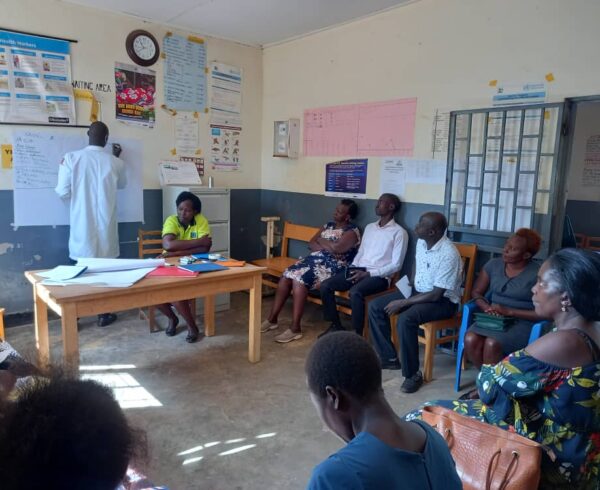
    Health facility visit - OVC mentorship

    Improving Services to Orphans and other Vulnerable Children

    By Nancy Karunganwa | Article, News | Comments are Closed | 2 March, 2023 | 0

    The Orphans and other Vulnerable Children (OVC) program is aggressively and competently contributing to ending the HIV epidemic. Continuous assessment of competence of services and attention to utilization of clean data for program management have a vital bearing on attainment of this goal.

    In November 2022, the METS team working together with Ministry of Gender, Labor and Social Development, USAID’s Strategic Information Technical Support (SITES) and other stakeholders conducted a follow-on OVC service quality assessment to assess satisfaction among the beneficiaries of the program services provided between October 2021 – March 2022. The assessment was meant to highlight the strengths and gaps in OVC service provision and provide possible recommended actions for improvement in 261 OVC households in the Rwenzori Region.

    The assessment was done at three levels: the household with an adolescent or child living with HIV (A/CLHIV), the health facility/community service organization (CSO) site and artisan offering training to the beneficiary.

    Up to10% of OVC households with A/CLHIV were sampled to verify services reported at both the community service organization (CSO) site and at the health facilities. At household level, a customized electronic assessment data form was used to collect information on household income & HIV treatment status. After the household visits, teams visited health facilities where C/ALHIV were receiving ART Treatment to verify ART refills, appointments, and viral load tests. Artisans contracted by the CSO to skill household members were visited to assess their progress and competence and to draw specific action plans to address the identified gaps.
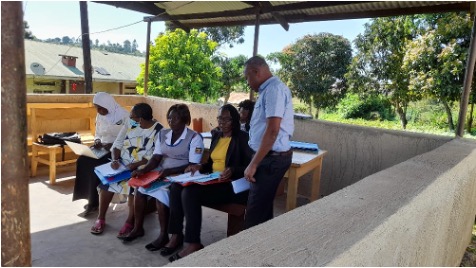
    Artisan Competence Assessments during the FY22 follow-on OVC SQA

    Overall, the assessment revealed that the quality of OVC service offered in the Rwenzori region was adequate and met expectations at 86% on average under the sections of Economic Strengthening & Stability, Education & Development, Care & Protection and Survival and Health.

    Identified gaps included inadequate documentation to confirm CSOs follow-up of A/CLHIV, unverified information between the CSO OVC register and information provided by the OVC caregivers, data inconsistency in the OVC household case files and OVC register, and use of wrong OVC service codes to document services at households.

    The results of the assessment demonstrated that there is strict adherence to quality standards by OVC service providers when offering OVC services to OVC households on ART which can significantly increase the number of virally suppressed Children.
    No tags.

    Related Post

    • PILOTING THE DREAMS MOBILE APP

      By Nancy Karunganwa | Comments are Closed

      The DREAMS program, a service delivery model based on HIV risk assessment, supports young people aged 10-24, adolescent girls/boys and young women/men (AGYW & ABYM). The program is currently implemented in 24 districts countrywide. ToRead more

    • The Uganda eHealth Interoperability Architecture

      Transforming Health Care Through Linked Digital Systems 

      By Nancy Karunganwa | Comments are Closed

      The Ministry of Health (MOH) has embarked on a drive to transform health service delivery through use of digital systems. Working with partners, the MoH is spearheading the design, development, and implementation of interlinked healthRead more

    • Status of CBS Implementation in Uganda

      Tracking Trends in HIV Outcomes: The Implementation of HIV Case-Based Surveillance

      By Nancy Karunganwa | Comments are Closed

      The Monitoring and Evaluation Technical Support (METS) Program, in partnership with the Ministry of Health (MoH) and various implementing partners, is spearheading the HIV Case-Based Surveillance (CBS) initiative across Uganda. This effort utilizes electronic medicalRead more

    • DHIS2 CONFERENCE

      By Nancy Karunganwa | Comments are Closed

      One Community, 2 Conferences, 2 Countries, 3 Perspectives 12th – 16th June 2023, Oslo, Norway 3rd – 8th July, 2023, Dar-es-Salaam, Tanzania Group photo of Norway DHIS2 conference participants  Group photo of Tanzania DHIS2 conferenceRead more

    • Mentorship and training of users on how to use UgandaEMR to capture and store HTS data

      Functionalization of HIV Testing Services (HTS) in UgandaEMR

      By Nancy Karunganwa | Comments are Closed

      UgandaEMR is a facility-level electronic medical system designed to support data management for HIV programs and other health services. METS is mandated to support PEPFAR Implementing Partners ensure submission of quality National and PEPFAR reports,Read more

    NextPrevious

    Programme Areas

    • Health Systems Strengthening
      • District Led Programming
      • Strategic Information
    • Data Science & Informatics
    • Disease Surveillance

    Archives

    • October 2024 (1)
    • July 2024 (1)
    • June 2024 (1)
    • April 2024 (1)
    • March 2024 (1)
    • February 2024 (1)
    • December 2023 (1)
    • October 2023 (1)
    • September 2023 (1)
    • August 2023 (1)
    • July 2023 (1)
    • June 2023 (1)
    • May 2023 (1)
    • March 2023 (1)
    • February 2023 (1)
    • January 2023 (2)
    • December 2022 (1)
    • November 2022 (2)
    • July 2022 (1)
    • May 2022 (1)
    • April 2022 (1)
    • March 2022 (3)
    • December 2021 (1)
    • April 2021 (1)
    • March 2021 (1)
    • September 2020 (2)
    • August 2019 (1)
    • July 2019 (1)
    • June 2019 (1)
    • November 2018 (1)
    • October 2018 (2)
    • August 2018 (2)
    • July 2018 (2)
    • June 2018 (3)
    • May 2018 (1)
    • April 2018 (1)
    • February 2018 (2)
    • January 2018 (5)
    • November 2017 (4)
    • October 2017 (3)
    • September 2017 (1)
    • June 2017 (2)
    • May 2017 (1)
    • March 2017 (3)
    • February 2017 (1)
    • January 2017 (3)
    • November 2016 (3)
    • October 2016 (15)
    • September 2016 (1)
    • May 2016 (1)
    • April 2015 (1)
    Copyright © 2017. All rights reserved
    • Home
    • About
      • METS Programme
      • METS Team
    • Our Core Work
      • Health Systems Strengthening
        • District Led Programming
        • Strategic Information
      • Data Science & Informatics
      • Disease Surveillance
    • Resources
      • Articles
      • Publications
      • Newsletters
      • Reports
      • Bulletins
      • District Profiles
      • District Strategic Plans
      • Videos
      • Mobile Application
      • BUHIC
    • Dashboards
      • UgandaEMR Portal
      • HIV Prevention Portal
      • DREAMS Tracker
      • RASS Dashboard
      • Viral Load Dashboard
      • VMMC Dashboard
      • Option B+ Dashboard
      • UgandaEMR Metrics Dashboard
    • Updates
      • News
      • Events
      • Careers
    • Contact
    METS