Deprecated: Automatic conversion of false to array is deprecated in /home/ki449515/public_html/wp-content/themes/thefox/includes/zilla-likes/zilla-likes.php on line 212

Participants attending the Panel disucssions
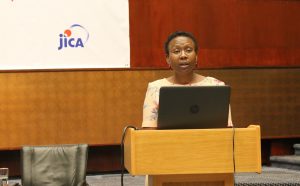
Dr. Aceng making her remarks
The conference brought together international experts and key stakeholders from all levels of our health system to discuss best practices, lessons learned, and way forward in strengthening and improving the health system governance structures, supply chains, information systems, financing, human resources, infrastructure, service delivery, and patient safety.
The conference was opened and closed the Honourable Minister of Health Dr. Jane Ruth Aceng. The minister also launched two key MoH documents, the Service Standards and Service Delivery Standards and Maternal and Perinatal Death Surveillance and Response (MPDSR), and a new and improved MoH online knowledge management platform at the conference.
The key note speakers included Dr. M. Rashad Massoud, Director of the USAID ASSIST Project and Senior Vice President for University Research Co., LLC. (URC) who discussed integration of QI in routine health care delivery under the title Demystifying quality improvement. He discussed the core principles of quality and improvement, reminding participants to not forget the foundation of quality improvement and not get lost in the confusing terminology used within the field.
Professor Gerald Karyeija from Uganda Management Institute discussed the importance of leadership and accountability in driving successful improvements under the title Leadership and accountability for quality health care. He emphasised the need to see the provision of quality care as more than just “good surgeries and procedures”, but as a culture propagated by accountable leadership. As decision-makers and agenda setters, leaders are obligated to account for their decisions or actions thus making leaders accountable to the entire health care system.
Dr. Eleuter Samky from Mbeya Regional Referral Hospital, Tanzania, discussed their experiences in implementing Sort, Set, Shine, Standardise, and Sustain (5S). Before 2007, the hospital was in dire state, where medical records were not filed, beds and trolleys had been waiting to be repaired for over 6 months, the staff minds and processes were equally disorganised. With the introduction of 5S, the hospital saw increased ownership of work processes, attitude change, decreased conflicts at work, and strong team work. The safety at the workplace increased, as well as increased engagement, professionalism and excellence.
Over 49 oral and 55 poster presentations from all over the country were presented. One skills building session titled Scientific writing for publication for all participants was added to strengthen their capacities to disseminate QI work. This session was facilitated by Dr Simon Muhumuza from METS. Three METS M&E short-term fellowship made oral presentations in the areas of health information systems and surveillance where they showed how the utilised meagre resources to improve reporting and patient monitoring in the districts of Kamwenge, Kyenjojo and Mityana.
Amongst the low-cost solutions shared included the use of viral load stickers to remind clients and providers of viral load due dates in a high patient volume facility in Rakai which resulted into improved viral load testing and uptake. Client files were checked, then stickers were given to determine when clients should come back in. This resulted into 73% increase in routine viral load testing over a year period which is a good example for strengthening accountability for both the patient and health facility in conducting follow-up.
Many presenters shared the importance of using QI teams to establish appropriate targets, monitor progress and follow-up on actions. Mbale district noted the formation and functionalisation of QI teams at health facilities was a prerequisite for sustainable health outcomes. The use of QI teams allowed them to track progress and hold team members accountable.
Kamwenge District noted that districts are very busy with many competing activities. In response to this challenge, Kamwenge District coordinated a joint planning meeting with all implementers to avoid conflict, track ongoing projects, and increase transparency among all partners. They integrated the movement plans and enriched the mentorship content to include multiple thematic areas (HIV/AIDS, TB, and leprosy) resulting into strengthened mentorship training across all programmes.
Non-financial motivation was essential for improved quality service delivery, which includes leadership. Leaders must understand their health workers’ needs, priorities, perspectives. By involving them in leadership decisions, or in the understanding of leadership decisions, they will produce higher quality results.
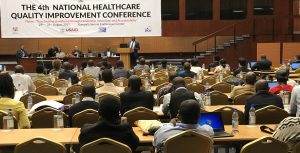
Cross-Section of the participants during the panel discussions
A Panel discussed the conference theme from the perspective of the academia, the district leadership, the political, health consumers and the implementing partners. The conference created a platform for scientists, clinicians, activists, and community workers to showcase their significant contribution towards improving quality of health care in Uganda and featured a wide range of sessions and learning opportunities on the current methods, approaches and developments in quality improvement. It also served as a platform for participants to discuss the challenges in relation to quality service delivery and strengthening systems for sustained quality improvement.
There are many small isles of excellence, but there is a need to focus on system-wide improvements. This conference emphasised that leadership and execution are of the essence to the success of improvement.
Article by Julius Sendiwala, M&E Technical Adviser METS
]]>